Plants live a high-wire act, dependent on sunlight that is both life-giving and destructive. Their survival hinges on intricate mathematical orchestrations within their cells, allowing them to constantly adapt to the sun's whims. The following Q&A delves into the hidden dance that keeps them thriving amid dangerous UV rays and wildly shifting light intensities.
Why is feeding on sunlight such a dangerous game for plants?
Sunlight is essential for photosynthesis, but it carries serious risks. Ultraviolet waves can snap DNA strands and degrade vital molecules like proteins and lipids. Even more challenging, light intensity varies wildly—from the gentle glow of dawn to the scorching blaze of a summer noon, from deep shade one moment to full sun the next. Plants must endure and thrive through these extremes, whether calories trickle in or flood in as a deluge. This constant fluctuation means their solar-powered machinery is always at risk of underperformance or damage. To survive, they need sophisticated regulatory systems that can instantly tune energy capture and dissipation.
How do plants cope with sudden changes in light intensity?
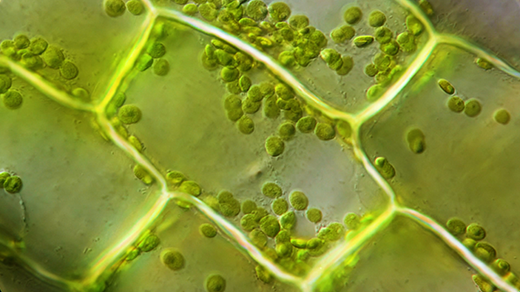
Plants employ a variety of rapid molecular responses to handle light swings. When a cloud blocks the sun, they quickly downregulate light-harvesting complexes to prevent overexcitation. They dissipate excess energy as harmless heat through a process called non-photochemical quenching. At the same time, the electron transport chain is adjusted to avoid a backup of electrons that would create dangerous reactive oxygen species. This whole orchestration—a mathematical dance of proteins and electrons—happens in milliseconds. Additionally, chloroplasts can physically move within cells, shifting away from intense light or clustering in dim conditions. These mechanisms allow plants to balance energy capture and photoprotection in real time, a feat that requires precise chemical and physical coordination.
What exactly is the 'hidden mathematical dance' inside plant cells?
The phrase 'hidden mathematical dance' describes the complex, rhythmic interactions among proteins, enzymes, and molecules that regulate photosynthesis under variable light. At its core are feedback loops and nonlinear dynamics. For example, state transitions redistribute excitation energy between photosystem I and II depending on light quality. Non-photochemical quenching follows a sigmoidal relationship with light intensity, resembling a mathematical equation that prevents overload. Even the movement of chloroplasts obeys optimal search algorithms—they cluster or scatter based on light signals. These processes are not random; they are governed by kinetic constants, diffusion rates, and threshold responses that create a coordinated cellular ballet. This dance ensures that the plant harvests enough light for survival without succumbing to photodamage, and it is a prime example of biology using mathematical principles to solve environmental challenges.
How do plants protect their DNA from UV damage while still using sunlight?
Plants have evolved multiple layers of defense against UV radiation. First, they produce natural sunscreens: pigments like flavonoids and sinapate esters that absorb harmful ultraviolet wavelengths before they reach sensitive DNA. Second, efficient repair systems—such as photolyase enzymes—can fix thymine dimers caused by UV exposure. Third, chloroplasts and nuclei communicate through retrograde signals to adjust gene expression in response to light stress. This requires a mathematical-like feedback loop where damaged molecules trigger protective responses. Additionally, plants can alter leaf angle or produce thicker cuticles to reduce UV penetration. All these strategies are precisely regulated: too much protection would hamper photosynthesis, too little invites mutation. The balance is a continuous calculation, a hidden dance at the cellular level that keeps the plant safe without starving it of sunlight.
What happens inside a plant cell when the sun suddenly becomes too bright?
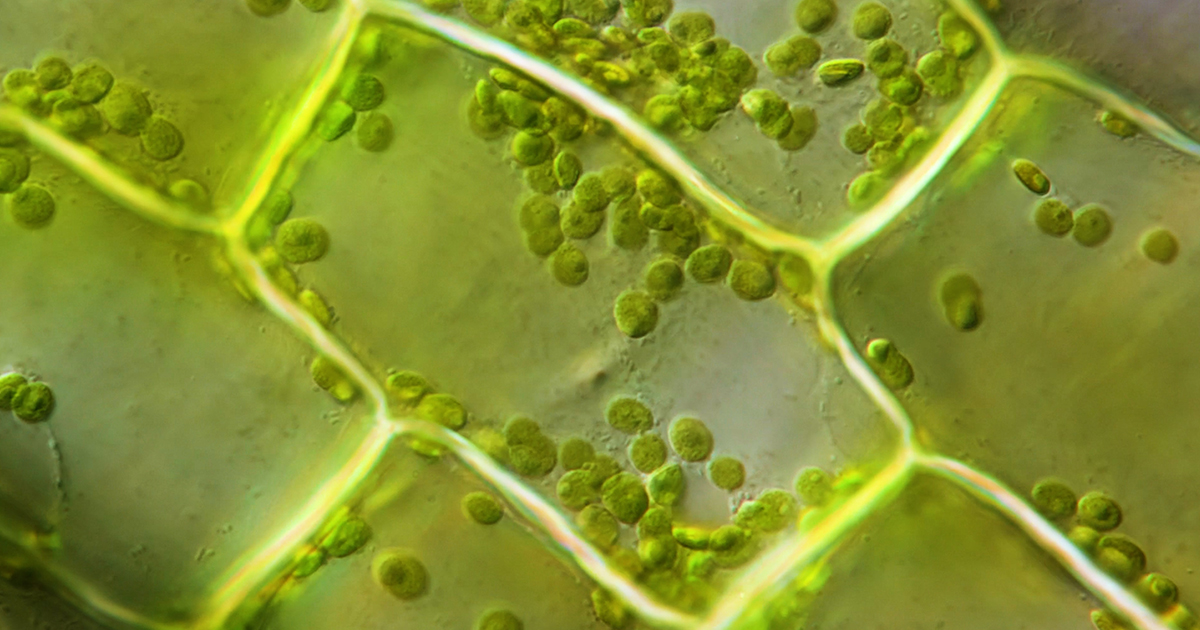
When light intensity spikes, the cell launches an emergency response. The light-harvesting antennae embedded in thylakoid membranes quickly switch from energy capture to energy dissipation. Special proteins like PsbS are activated, triggering non-photochemical quenching that converts excess light into harmless heat. Simultaneously, the electron transport chain slows down; a backup of electrons would create destructive reactive oxygen species. Protective enzymes like superoxide dismutase and ascorbate peroxidase mop up any radicals that form. Chloroplasts also start moving to less exposed areas of the cell, a process driven by actin filaments. This sequence—calibrated by the cell's internal sensors—is a rapid, synchronized dance. It occurs within seconds to minutes and involves multiple mathematical thresholds that dictate when to activate or deactivate each response, ensuring the plant survives the sudden deluge of solar energy without permanent damage.
Can plants anticipate changes in light, or do they only react?
Plants are not purely reactive; they possess both anticipation and memory. Thanks to an internal circadian clock, they can predict daily cycles—ramping up photosynthetic machinery before dawn and winding it down at dusk. They also track light history: if a plant experiences repeated cloud cover, it adjusts its quenching capacity accordingly for future events. Some research suggests plants can even 'learn' the timing of sunflecks in understory environments. This predictive ability involves intricate interactions between photoreceptors and clock genes, creating mathematical oscillations that anticipate predictable changes. However, for sudden, unpredictable shifts (like a cloud suddenly disappearing), plants rely on ultrafast reactive systems. This dual strategy—proactive planning coupled with reactive reflexes—demonstrates a sophisticated mathematical logic that maximizes survival in a variable light world.