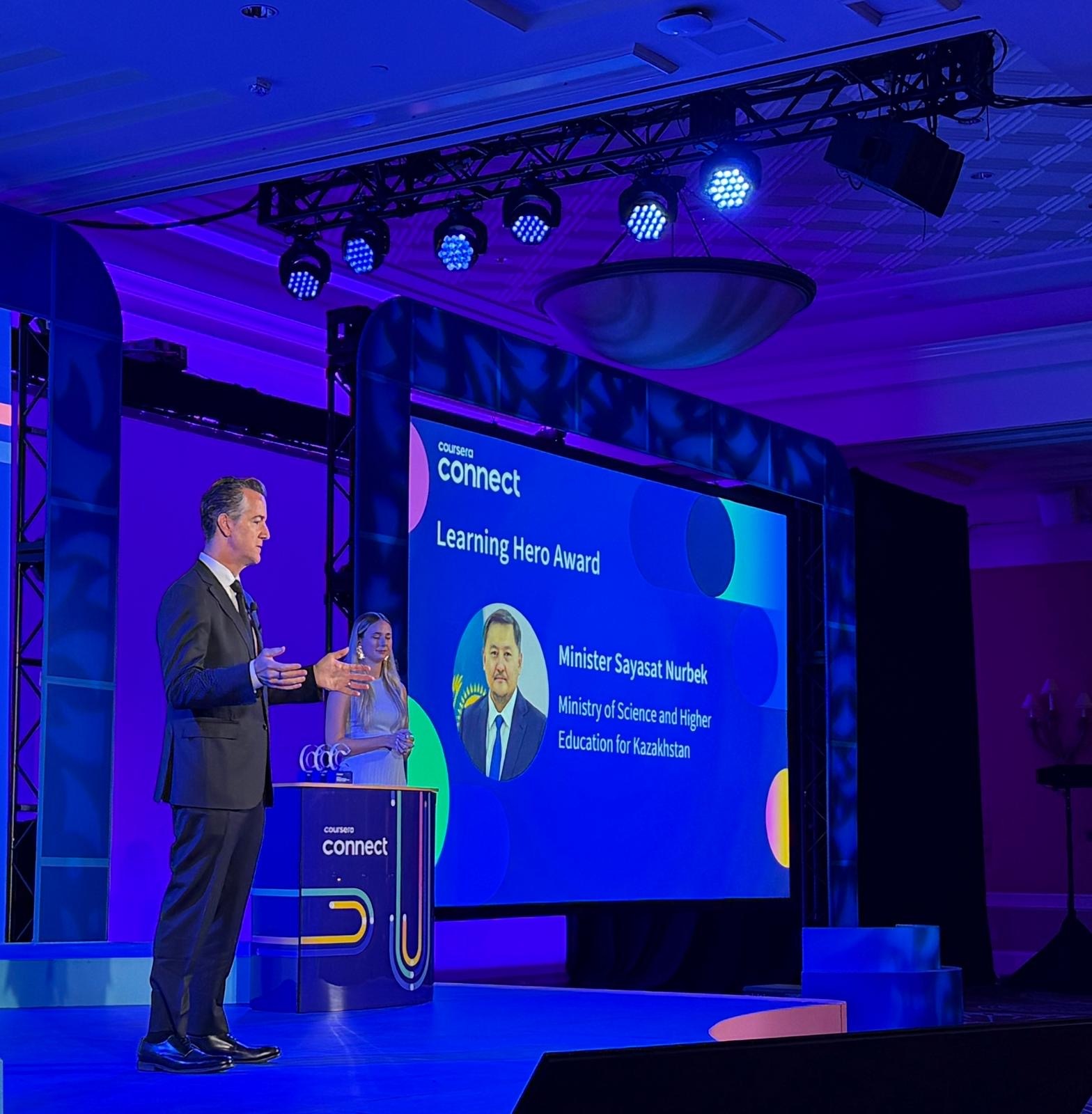
As digital transformation reshapes the global labor market, Kazakhstan is taking bold steps to future-proof its higher education system. The Ministry of Science and Higher Education has renewed its strategic partnership with Coursera, a leading online learning platform. This renewed collaboration is not just an extension—it represents a deepened commitment to integrating world-class learning into the national curriculum, bridging the gap between academic theory and real-world careers. Here are 10 key ways this partnership is driving change across Kazakhstan’s universities and beyond.
1. A Renewed Commitment to Digital Learning
The renewed agreement between Kazakhstan’s Ministry of Science and Higher Education and Coursera cements a long-term vision for digital education. Since 2022, the partnership has been a cornerstone of the Ministry’s strategy to modernize higher education. By continuing this collaboration, the country ensures that tens of thousands of students will have ongoing access to high-quality, globally recognized online courses. This renewal signals a stable, long-term commitment to integrating digital learning into the very fabric of Kazakhstan’s education system, making it a permanent feature rather than a temporary experiment.
2. For-Credit Learning Becomes the New Norm
One of the most transformative aspects of the partnership is the ability for students to take Coursera courses for academic credit. These courses now count toward official ECTS credits, which are transferable across universities in Europe and beyond. This integration means that students no longer have to choose between earning a degree and gaining practical skills—they can do both simultaneously. By embedding for-credit learning into the curriculum, the Ministry is ensuring that every student can graduate with a degree that is both academically rigorous and immediately relevant to the job market.
3. Access to Over 13,500 World-Class Courses
Through Coursera for Campus, Kazakhstani students now have a library of over 13,500 courses from more than 375 leading global universities and companies, including Stanford, Yale, Google, and IBM. This vast selection covers disciplines from engineering to humanities, allowing students to explore new fields and deepen expertise in their chosen areas. The breadth of choice also means that universities can easily supplement their own offerings with specialized content that might be difficult to develop locally, enriching the overall academic experience for every learner.
4. Industry-Recognized Certifications in High-Demand Fields
Students can earn professional certificates in Data Science, Cybersecurity, Artificial Intelligence, Engineering, and Finance. These certifications are designed and vetted by industry leaders, ensuring that they reflect the skills employers actually need. By adding these credentials to their resumes, Kazakhstani graduates will stand out in the global digital economy. The focus on high-demand fields directly addresses labor market gaps, preparing students for careers that are not only in demand today but will remain crucial in the future.
5. Equipping Students with Foundational AI Knowledge
The partnership provides widespread access to introductory AI courses such as Google AI Essentials and advanced content like Anthropic’s Building with the Claude API. AI literacy is no longer a niche skill—it is becoming a fundamental requirement across all industries. By making these courses available to every student, regardless of their major, Kazakhstan is ensuring that its future workforce understands the basics of artificial intelligence, from how AI models work to their ethical implications. This broad-based AI education will empower students to use AI tools effectively and responsibly.
6. The AI-Sana Initiative: AI Literacy for All
Directly supporting the national AI-Sana initiative, Coursera’s catalog of over 1,100 generative AI courses helps ensure that every graduate has foundational knowledge of Generative AI and Digital Ethics. AI-Sana recognizes that AI is reshaping every field, from medicine to agriculture, and that understanding it is essential for all students. This initiative goes beyond technical skills—it also covers the ethical dimensions of AI, preparing students to navigate the challenges of an AI-driven world with critical thinking and integrity.
7. Promoting the Kazakh Language in Online Education
To overcome language barriers, over 4,000 courses on priority topics like AI, data science, and machine learning have been translated into Kazakh. This effort ensures that the best educational content is accessible to all Kazakhstani students in their national tongue, preserving linguistic heritage while embracing global knowledge. By making high-quality courses available in Kazakh, the Ministry is fostering equity in education—no student has to compromise their learning due to language constraints. It also strengthens the use of Kazakh in academic and technical contexts.
8. Impressive Scale: Over 235,000 Students Reached
Since the partnership began, over 235,000 students across more than 100 Kazakhstani universities have been reached. This scale demonstrates the widespread adoption of online learning within the country’s higher education system. The fact that such a large number of students have engaged with Coursera’s platform shows that the integration is not superficial—it is genuinely impacting the majority of the student population. This reach is a testament to effective implementation and the appetite among students for flexible, high-quality learning opportunities.
9. Over 500,000 Certificates Earned
Students have collectively earned more than 500,000 certificates, reflecting a strong culture of completion and skill acquisition. Each certificate represents a verified skill that can be showcased to employers. This volume of certifications indicates that students are not just browsing courses—they are actively completing them and gaining tangible credentials. For Kazakhstan’s labor market, this means a growing pool of talent with proven, up-to-date skills in areas critical for economic development and innovation.
10. Bridging the Gap Between Curriculum and Careers
At its core, the partnership is about aligning what students learn with what the economy needs. By modernizing curricula through access to cutting-edge content and industry certifications, the Ministry is ensuring that graduates are job-ready from day one. The collaboration provides a continuous feedback loop: as industry demands evolve, new courses and certifications are added, keeping the curriculum dynamic. This approach turns universities into engines of economic growth, producing talent that can drive digital transformation and compete globally.
In conclusion, Kazakhstan’s renewed partnership with Coursera is a forward-thinking model for how nations can leverage online learning to modernize higher education. From for-credit courses and AI literacy to language inclusion and massive student engagement, the initiative is delivering tangible results. As the digital economy continues to evolve, this collaboration positions Kazakhstan to not only keep pace but to lead in preparing its citizens for the future of work.