Introduction: A New Chapter for Warp Terminal
Warp, the modern terminal and agentic development environment built in Rust, has officially open-sourced its client. The code is now available on GitHub, marking a significant shift in how the company plans to accelerate product development. However, the contribution model under which Warp will engage the community is far from traditional—instead of humans writing code, the focus is on using AI agents for implementation while human contributors handle ideation, specification, and review.
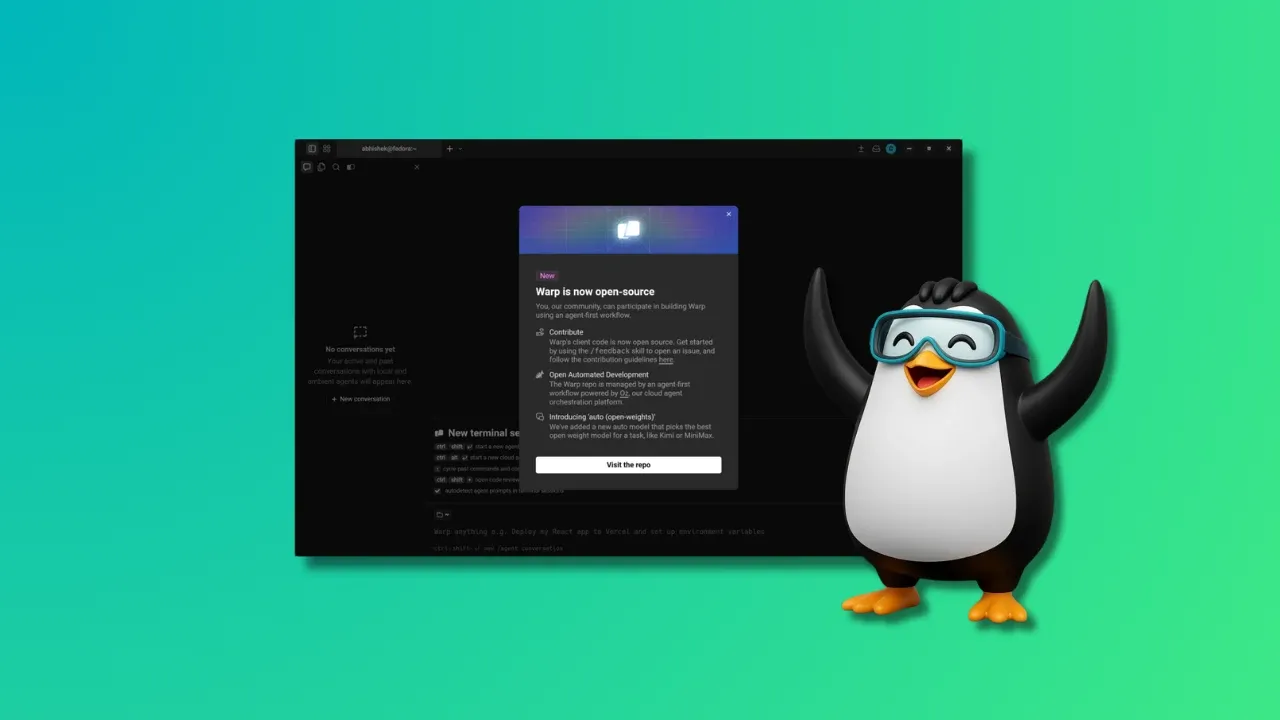
Why Open Source? CEO Insights
Zach Lloyd, CEO of Warp, explained the rationale behind the move: "Open-sourcing is fundamentally coming from our desire to build a successful business. We are competing with other highly funded, closed-source competitors, and we think opening and providing the resources for the community to improve Warp is a smart way for us to accelerate product development." This strategy positions Warp to leverage community contributions without overwhelming its team with implementation tasks.
The Agentic Contribution Model
Warp’s approach to open source contributions is novel. The company identifies the main bottleneck in development not as code writing, but as human-led tasks such as feature decisions and software behavior verification. To address this, Warp introduces a workflow powered by its cloud agent orchestration platform, Oz, announced earlier this year.
Oz enables running multiple coding agents in parallel in the cloud, with full visibility and control. The platform uses GPT models from OpenAI—the founding sponsor of the repository—to generate code guided by Warp’s rules and verification processes. This ensures that contributors can get features right efficiently. While other coding agents are welcome, Warp recommends using Oz because it already contains the correct context and built-in checks for this workflow.
The model encourages human contributors to focus on creative and analytical tasks: generating ideas, writing specifications, and reviewing agent-produced code. This division of labor aims to accelerate development while maintaining quality.
Licensing and Code Availability
The client codebase is hosted at github.com/warpdotdev/warp under a split licensing scheme. The UI framework, comprising the warpui_core and warpui crates, is released under the permissive MIT license. The remainder of the codebase falls under the AGPLv3 license, which ensures that any modifications distributed to others must also be open source.
Partnerships and AI Model Support
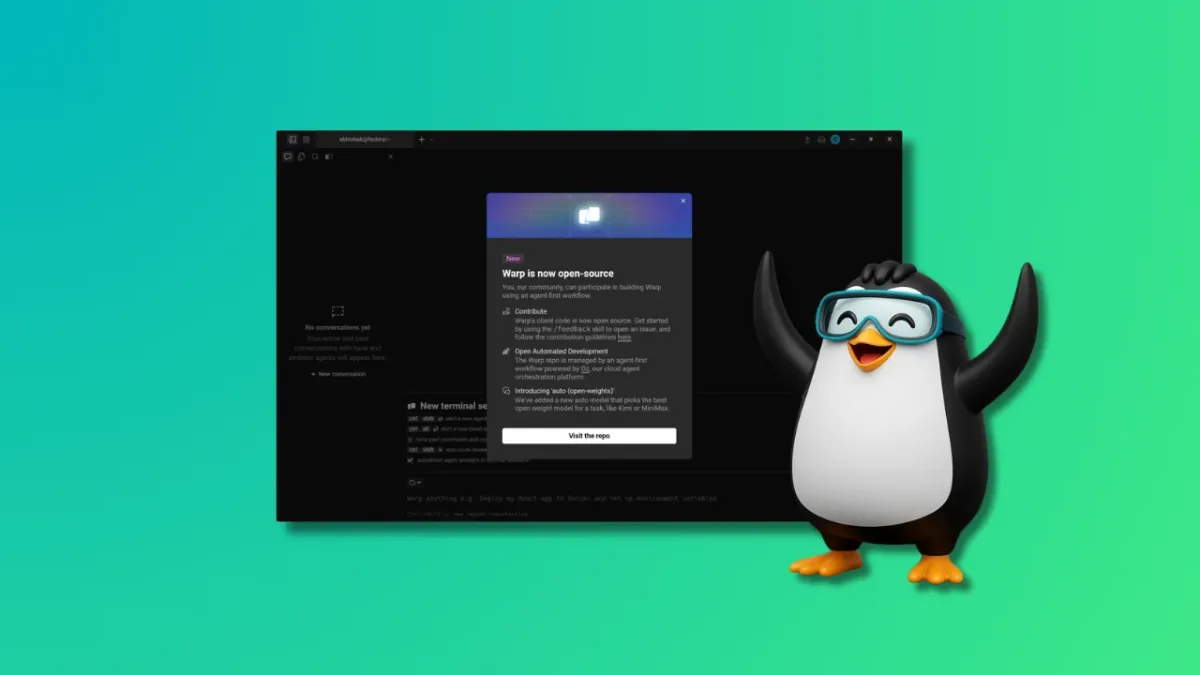
Alongside the open-sourcing announcement, Warp is expanding its support for open source AI models. New integrations include Kimi, MiniMax, and Qwen. Additionally, a new routing option called "auto (open)" is introduced, which automatically selects the best open model for a given task. This flexibility allows developers to choose models that fit their needs and preferences.
Warp is also shipping a settings file for programmatic control and easier portability across devices, making the terminal experience more consistent and customizable.
A Comparison with Cal.com
Warp’s open source move echoes a similar strategy by Cal.com, which also opened its codebase to accelerate development. However, Warp’s agentic contribution model is unique—where Cal.com relies on traditional human pull requests, Warp leverages AI agents to handle the heavy lifting, transforming the community’s role from coders to specifiers and reviewers.
Conclusion: A Bold Experiment
Warp’s decision to open source its terminal client while pioneering an AI-driven contribution model represents a bold experiment in open source collaboration. By combining the community’s creativity with the efficiency of AI agents, the company hopes to outpace closed-source competitors. Only time will tell if this model becomes a blueprint for future projects, but for now, it offers a glimpse into the next evolution of open source development.
Suggested Read: Ubuntu is Betting on AI